
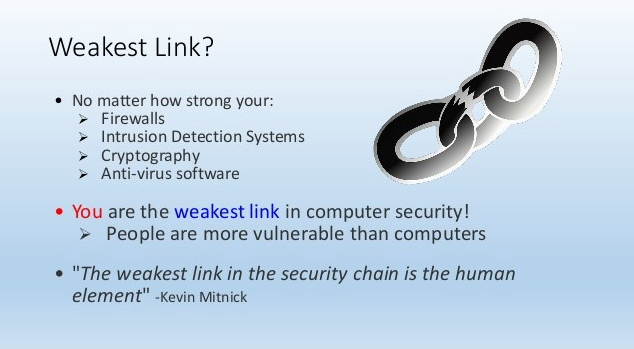
Cyber Security is the practice of protecting systems, networks, workstations, programs and people from digital attacks. These cyber attacks are aimed at extorting money and disrupting normal business processes. While many companies have the appropriate hardware, software and IT safeguards in place, the weakest link is their employees ignorance. The biggest dangers are from within and the cost can be enormous.
Electronic data today is not always safe. Employees online are at risk, and those working from home are at a greater risk. They are not trained and make simple, but costly, mistakes. Now they are logging in remotely, adding a new layer of complexity.
10% of Small Businesses Breached Shut Down in 2019
As a result of cybercrime, 69% of small organizations were forced offline for a limited time and 37% experienced significant financial loss.
Organizational assets are at risk. In today’s digital world , the continuation of any business that experiences a breach, is at risk. Employees are the weakest link in the cyber security chain, but they don’t have to be. We can help!
More data = greater risk. More personally identifiable information (PII) = greater risk and liability.
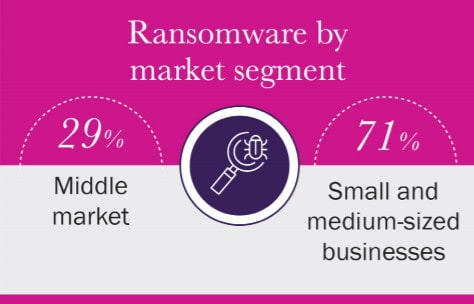
Cyber crime happens 24 hours a day, 7 days a week. It never sleeps. Chances are that you know someone who has been affected. Most cyber crimes target employee ignorance. But what if there was a simple affordable solution to strengthen that weakest link? The good news, there is. We call it the the Breach Prevention Platform (BPP)
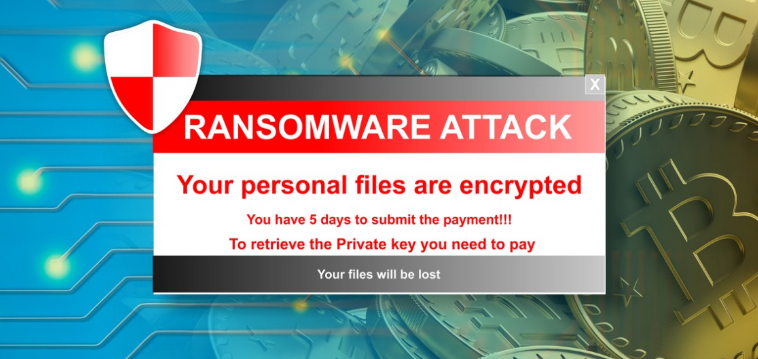
More and more business owners are seeing something like this…
Is your company data really safe? Are you sure? Would you bet your home equity on it? Read on for a true story…
A law firm in central Florida had a cyber attack in the form of a Phishing email. Ultimately this led to a theft of over $150,000 in a real estate transaction, which had to be funded immediately. In the short term, one of the partners had to borrow against his home to pay for the theft, until things could be sorted out. The emotional fallout across the practice went on for 6 months. The employee who made the mistake lost their job. All employees had to be retrained and upgrades had purchased as the practice learned some painful and expensive lessons. It could have all been potentially avoided, with our solutions and tools in place.
What is Ransomware?
Watch this short video to find out…
Who is to blame if your employees are not properly trained?

The cost of a breach can come in many forms – hardware and software upgrades, the ransom itself, legal fees, customer compensation, credit restoration and even fines or penalties. These costs are only increasing.
Some of these costs come in the form of a damaged reputation or a decrease in sales. Targets 2013 data breach caused profit to drop more than 40 percent during the 4th quarter. In the end, it was caused by a single employee mistake. Thats a very expensive employee. The LabCorp and Quest breach was caused by a business associate who did not have appropriate safeguards in place. A simple mistake, human error. This business associate closed their doors as their contracts were immediately cancelled.
In the past, the majority of data breaches were minor events. Only a small amount of data was lost or it was not the most sensitive information. It was easier to recover from these data breaches. That is not the case anymore.
Strengthen the employee vulnerability chain. Get help TODAY.

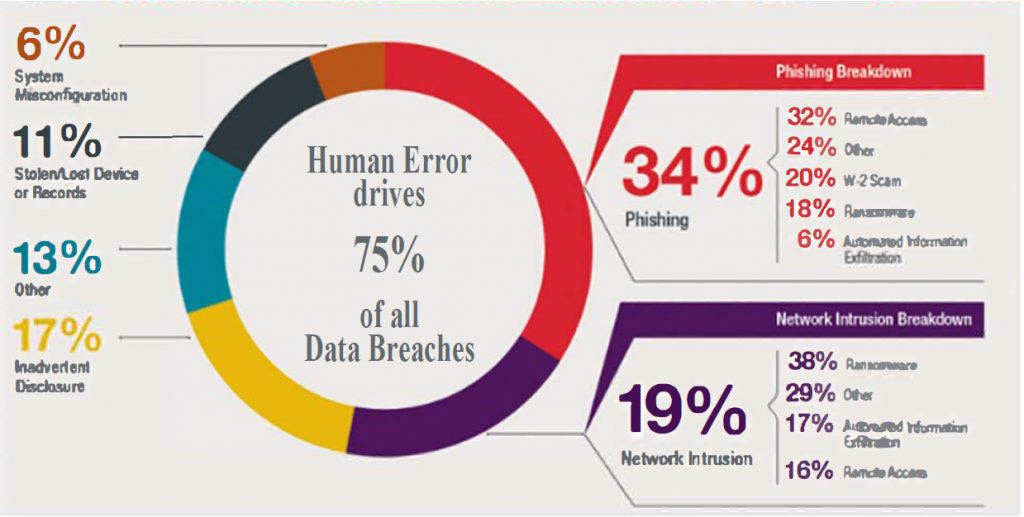
Human error and a lack of training and tools drives Phishing and Ransomware. Many of these problems can be avoided with the appropriate safeguards in place. Have you ever performed a Risk Analysis to determine your vulnerabilities? Are your employees properly trained? Do you know where your greatest risks are? By analyzing your organization, measuring and tracking your data, and training your employees, we can safeguard your data and turn your staff into Human Firewalls.
The best way for a small business to protect itself from cyber threats is to be Proactive about security. The time and resources spent on strengthening your employee training and security will pay dividends in the long run, as you will avoid or minimize the costs of a data breach. For those incidents that are unavoidable, we offer Cyber Insurance, which pays the cost of the breach (including the ransom) and many other associated expenses.
Strengthen the employee vulnerability chain. Get help TODAY.